Watered Down Trainings, Death Education, and the Future of Deathwork
Hello Doulas, Deathworkers, Deepies, and Grievers,
I have so much to say to you, but rarely sit down with pen to paper (or finger to keyboard) and share what’s moving through my mind and my world. Even writing that feels a little grandiose. I don’t imagine people sitting around awaiting this note.
But I do know this: when I write, things begin to flow.
And lately, I’ve had a lot on my mind about watered down trainings, the explosion of death education, and where I think we go from here.
The Problem With “Weekend Experts”


Recently I saw a death doula with a large online platform make the bold statement that death doula trainings are harmful for the dying.
Of course, that framing is clickbait. Once you actually get into the nuance of the conversation, the point becomes more reasonable: there has been a massive rise in death educators, many of whom have very little actual bedside experience.
When I first began teaching doulaship, there were only a handful of us in this space.
I remember telling my early students that I hoped this movement would grow so large it eventually put me out of business. I wanted death literacy to become commonplace. I wanted every family to have support. I wanted people to stop being so terrified of mortality and grief.
That part still feels true. The average person is still very uncomfortable talking about death. Most people are profoundly grief illiterate. We suppress grief instead of expressing it, and after generations of doing that, we end up with the disconnected culture we live in today.
So I will probably always believe that more death education is better than less death education.
At the same time, in an unregulated field like this one, it is both easy and perfectly legal for someone to attend a weekend workshop and immediately begin calling themselves a practicing death doula.
That’s a real concern.
This work should be held to incredibly high standards of ethics, compassion, integrity, and intentional care. No matter how gifted a teacher is, the wisdom of this role cannot be fully transmitted in a weekend.
I say that while also acknowledging something important:
I teach weekend workshops too.
I also teach immersive multi-month programs.
And I do not believe short programs are inherently reckless or worthless. They serve an important purpose. They widen the conversation around death and dying. They help people care for their own loved ones better. They invite people into deeper reflection.
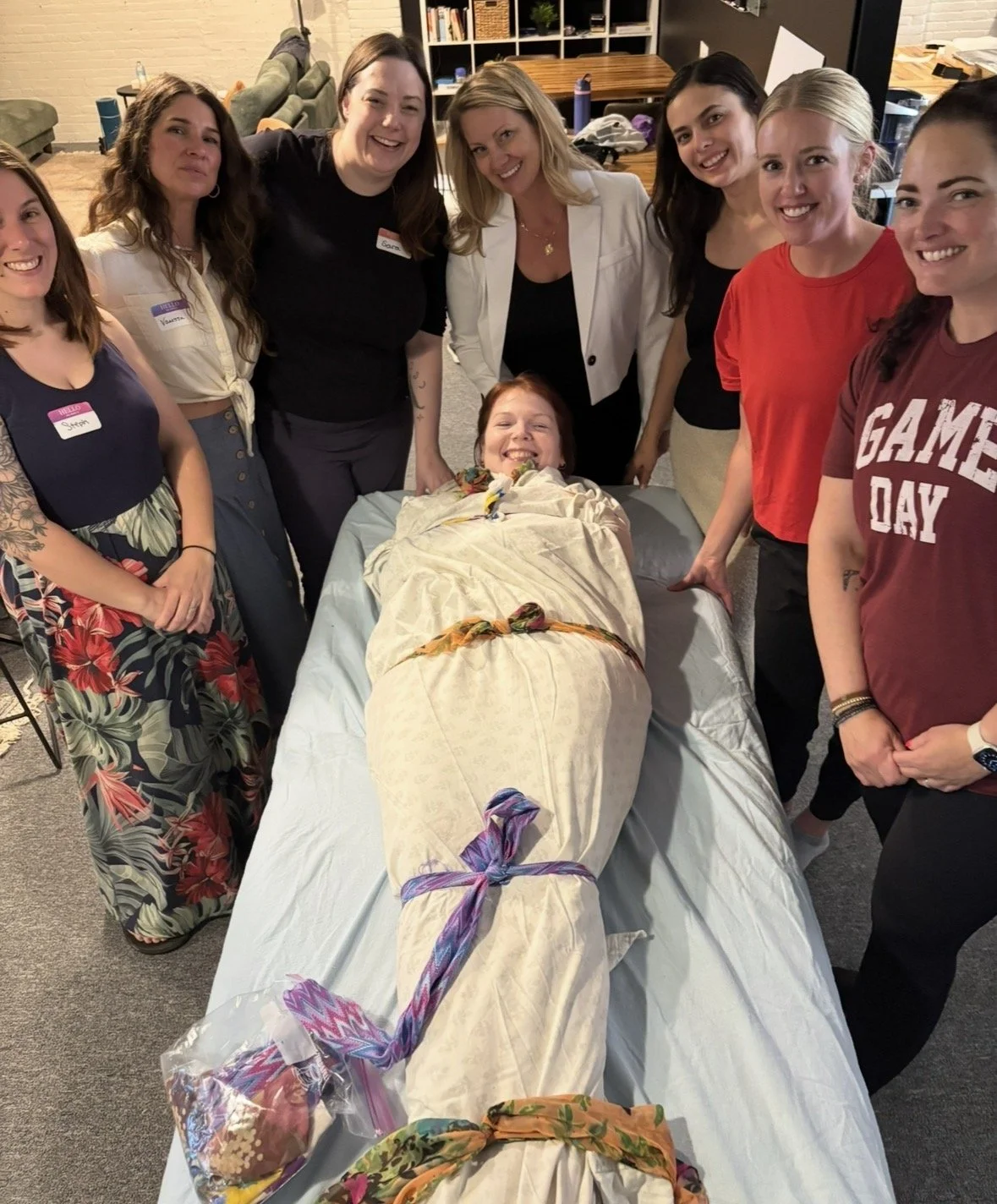
This is actually why I continue offering Threshold, my intensive weekend training. I believe there is enormous value in giving people a meaningful and accessible doorway into this work. Not everyone is ready to leap immediately into a months-long immersion, and not everyone attending these classes hopes to become a professional doula.
Some people simply want to care for their own people better.
Some are grieving. Some are curious. Some are beginning to feel called toward this path and need a place to start. But I also would not recommend that someone attend a short training and immediately open a professional practice based on that alone.
opening June 13

The Gap Between Philosophy and Practice


Many of my students already come from backgrounds in nursing, hospice, funeral directing, therapy, caregiving, or other adjacent fields that give important context to this work. I also strongly encourage students to volunteer with hospice whenever possible.
Because the truth is: there is a gap in deathwork between philosophy and practice.
Unlike nursing clinicals, there is no organized pathway for doulas to shadow one another. Most doulas are independent practitioners. We are self-employed. Our work happens inside intimate spaces.
It can feel insensitive or even inappropriate to ask a dying person or grieving family if a student can accompany us.
So many doulas diversify by teaching while simultaneously building their own practice. I understand why. I’ve done it too.
And again, I want to hold nuance here:
Death education is a good thing.
But there is a difference between sharing wisdom and offering professional training. We need clearer discernment around that distinction.
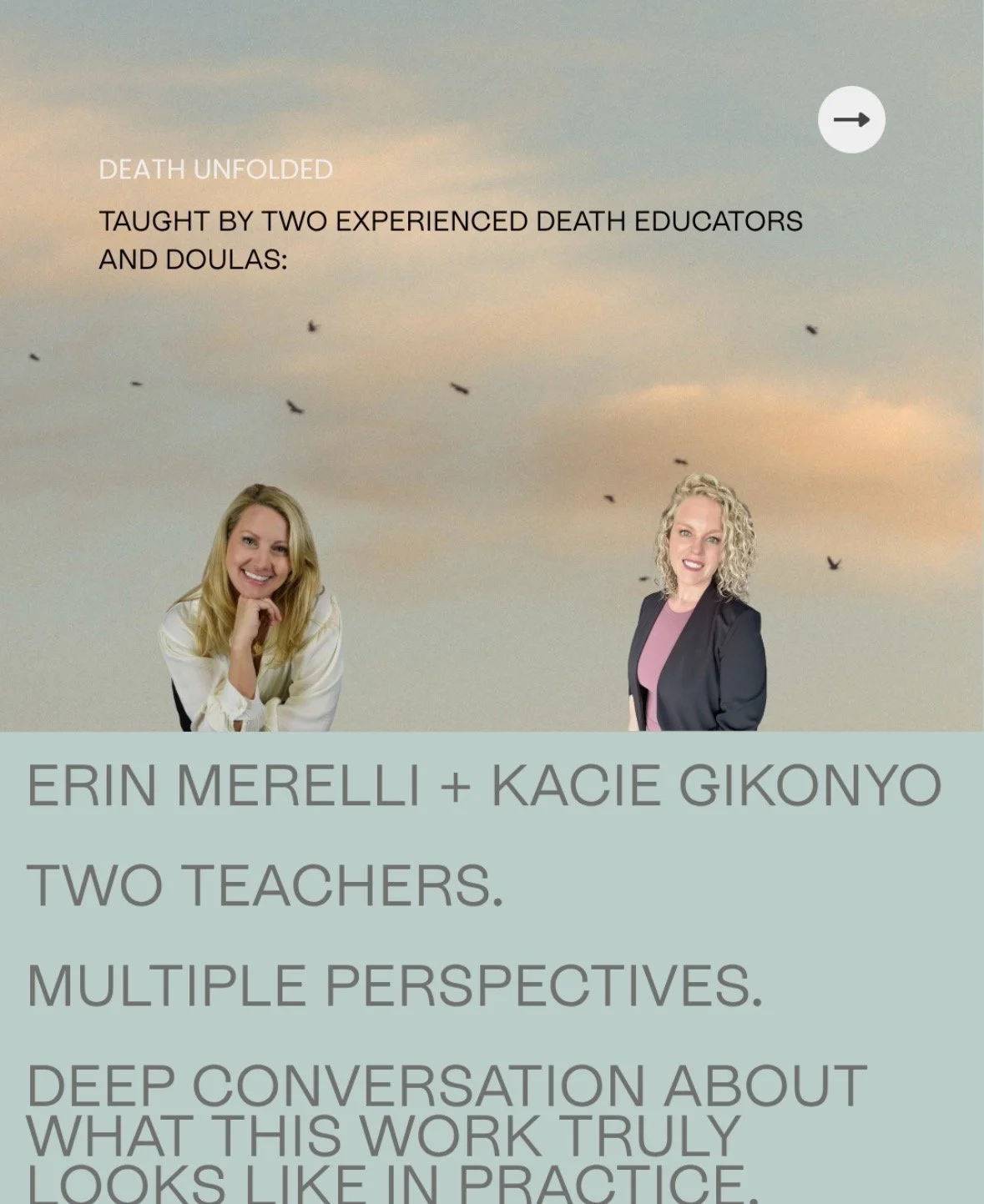
In many ways, this exact gap is what inspired a new program I’m building alongside Kacie Gikonyo.
Together, we created Death Unfolded, a six-week virtual mentorship and case-study program designed specifically to offer something closer to virtual shadowing. In my Deathschool Evolved program -case studies are always a favored part. They are interactive and ask you to think like a doula. In Death Unfolded, we center this practice throughout every class!
So many doulas finish training wishing they could accompany someone in the field, but the realities of this work make that difficult. We are walking alongside dying people and grieving families during some of the most intimate moments of their lives.
And so Death Unfolded became our attempt to bridge that divide.
Inside the program, we walk students week by week through the full arc of doula work:
the first meeting, the unfolding relationship, family dynamics, practical care, complicated emotions,hard deaths, beautiful deaths, and everything in between.
Because that is real life. And we want students to feel more prepared for it.
opening June 6
Why I Oppose Heavy Regulation
One reason many of us oppose formal licensing in this field is because, at its core, this is community work.
We are trying to do the opposite of industrializing deathcare.
We are trying to humanize it.
I do not want to tell a woman caring for her dying mother that she cannot practice as her mother’s doula because she lacks a license.
Doulaship is not healthcare. It is human care.
It is helping someone plan their funeral. Sitting vigil in the eleventh hour. Holding someone’s hand while they reconcile their life. Supporting grieving families. Helping people navigate one of the most mysterious transitions we will ever experience.
This work belongs to communities.
And so, for now, much of the responsibility lies in the integrity of the educator and the discernment of the student.
In my own programs, about two-thirds of students come because they hope to professionally practice as doulas or integrate these skills into an existing healing profession.
The remaining third come for personal reasons:
because they are grieving,
because they are ill,
because someone they love is dying,
because they want a more conscious relationship with mortality.
I would never want to gatekeep those people out of this work through overregulation.
For students seeking a deeper professional immersion, this is exactly why I continue offering Deathschool Evolved, my comprehensive multi-month training.
This is the cornerstone of my work.
We meet live in an intimate virtual classroom over the course of nine weeks. We build real community together. We process together. We practice together.
Students leave not only with education, but with meaningful preparation, deeper self-awareness, and a more grounded relationship with mortality itself. I do believe thatgraduates of Deathschool Evolved are prepared to become Death Doulas.
resuming June 20
And because not everyone can attend live classes due to time zones, caregiving responsibilities, finances, or work schedules, I recently created Deathschool Remote— a flexible version of the same curriculum that allows students to move through the coursework on their own schedule at a reduced tuition.
Different formats.
Different depths.
Different entry points.
But all rooted in the same mission: Helping people become more literate, compassionate, and present in the face of mortality.